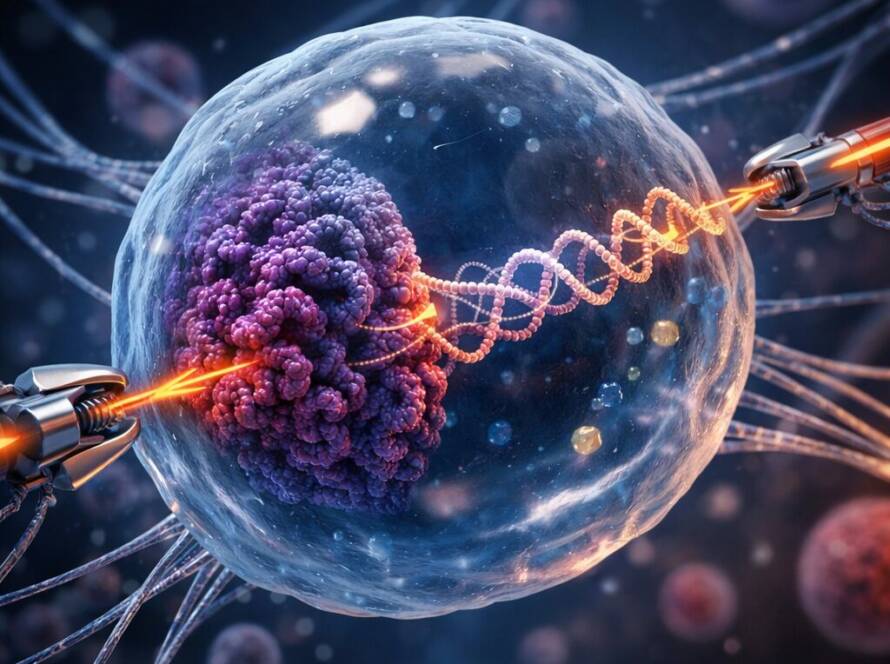
Human Pluripotent Stem Cells: A Foundation for Modern Biomedical Research
Human pluripotent stem cells (hPSCs), including both human embryonic stem cells (hESCs) and induced pluripotent stem cells (hiPSCs), have become indispensable tools in life sciences.
Their unique ability to self-renew indefinitely while retaining the potential to differentiate into virtually every specialized cell type in the human body has positioned them at the center of regenerative medicine, disease modeling, pharmaceutical research, and toxicity testing.
As demand for reliable cell-based models and advanced therapies continues to grow, the technologies used to culture hPSCs are undergoing a profound transformation.
Moving Beyond Traditional Cell Culture
Early hPSC culture systems relied heavily on mouse embryonic fibroblast (MEF) feeder cells, fetal bovine serum (FBS), and animal-derived extracellular matrices such as Matrigel®.
While these platforms enabled many of the first breakthroughs in stem cell research, they also introduced significant challenges, including:
- Risk of animal-derived pathogen transmission
- Batch-to-batch variability
- Uncontrolled differentiation
- Genomic instability during long-term culture
- Immune incompatibility due to xenogeneic components
- Limited compliance with clinical manufacturing standards
These limitations have accelerated the transition toward chemically defined, feeder-free, and xeno-free culture systems, which provide greater consistency, improved safety, and stronger regulatory compatibility for clinical applications.
The Rise of Defined and Xeno-Free Culture Systems
Modern hPSC culture increasingly relies on fully defined media and synthetic culture substrates designed to eliminate variability while preserving pluripotency.
New generations of culture media incorporate carefully selected recombinant growth factors, cytokines, and essential nutrients without relying on animal-derived components.
At the same time, advances in culture surfaces have introduced recombinant extracellular matrix proteins, synthetic peptides, and engineered polymers that provide more reproducible cell attachment while supporting long-term self-renewal.
Together, these innovations improve experimental reproducibility, facilitate quality control, and create culture systems that are better suited for Good Manufacturing Practice (GMP) environments.
Three-Dimensional Culture Is Expanding New Possibilities
Although conventional two-dimensional cultures remain widely used, researchers are increasingly adopting three-dimensional (3D) culture systems that more closely reproduce the native cellular microenvironment. Several complementary approaches are being explored, including:
- Scaffold-free cell aggregates
- Organoid-based systems
- Microwell culture platforms
- Microcarrier-based expansion
- Microencapsulation technologies
- Bioprinted tissue constructs
- Organ-on-chip platforms
By strengthening cell-cell and cell-matrix interactions, these systems offer greater physiological relevance while supporting applications ranging from disease modeling to large-scale cell manufacturing.
Each platform presents unique advantages and technical challenges, highlighting the importance of selecting culture strategies that best match specific research or manufacturing objectives.
Automation Is Redefining Stem Cell Manufacturing
As stem cell technologies move toward industrial-scale production, manual culture methods are gradually giving way to automated manufacturing platforms.
Recent advances combine robotics, machine vision, high-content imaging, and artificial intelligence to automate many critical aspects of cell culture, including:
- Continuous culture monitoring
- Colony identification and selection
- Liquid handling
- Image-based quality assessment
- Real-time process optimization
Machine learning algorithms are increasingly capable of recognizing subtle changes in colony morphology and predicting culture quality, helping reduce operator variability while improving process reproducibility.
These automated systems are laying the foundation for scalable manufacturing pipelines capable of supporting both research and clinical production.
Supporting Drug Discovery and Disease Modeling
The impact of hPSC technology extends far beyond regenerative medicine. Today, hPSC-derived models are widely used to generate tissue-specific cell types and organoids representing virtually every major organ system. These advanced models are enabling researchers to investigate diseases affecting the:
- Brain
- Heart
- Liver
- Kidney
- Lung
- Retina
- Intestine
- Skeletal muscle
When combined with genome-editing technologies such as CRISPR/Cas9, these systems provide highly controlled models that improve our understanding of disease mechanisms while supporting precision medicine and therapeutic development.
Transforming Preclinical Safety Testing
Human pluripotent stem cells are also reshaping preclinical drug evaluation. Compared with conventional animal models or immortalized cell lines, hPSC-derived human cells offer greater physiological relevance for predicting human responses to new therapeutics. Researchers are now developing specialized models to evaluate:
- Cardiotoxicity
- Hepatotoxicity
- Neurotoxicity
- Nephrotoxicity
- Hematological toxicity
Combined with automated imaging, electrophysiological analysis, high-content screening, and multi-omics technologies, these platforms have the potential to improve predictive accuracy while reducing dependence on animal testing.
Remaining Challenges
Despite remarkable progress, several important challenges remain before hPSC technologies can reach their full clinical and industrial potential. Current limitations include:
- Variability between cell lines
- Incomplete cellular maturation
- Long-term genetic stability
- Standardization of culture protocols
- Large-scale manufacturing
- Regulatory harmonization
Addressing these challenges will require continued innovation across biomaterials, culture systems, automation technologies, and quality control strategies.
The Future of Human Pluripotent Stem Cell Culture
The evolution of human pluripotent stem cell culture reflects a broader shift toward more reproducible, scalable, and clinically compatible manufacturing processes.
Future advances are expected to integrate artificial intelligence, robotic automation, organ-on-chip technologies, advanced 3D culture systems, and high-throughput biomanufacturing to create increasingly sophisticated platforms for research and therapy.
As these technologies continue to mature, success will depend not only on the biological properties of stem cells themselves but also on the ability to engineer highly controlled culture environments that support consistency, scalability, and regulatory compliance throughout the manufacturing process.
Looking Ahead
Human pluripotent stem cells are reshaping the future of biomedical science by enabling more predictive disease models, accelerating drug discovery, and expanding the possibilities of regenerative medicine.
The transition toward chemically defined media, xeno-free culture systems, advanced biomaterials, automated manufacturing, and intelligent process control represents a major step toward making stem cell technologies more reliable, reproducible, and accessible for both research and clinical applications.
As innovation continues across the entire cell culture ecosystem, optimized culture environments will remain a cornerstone for unlocking the full therapeutic potential of human pluripotent stem cells.
Scientific background: Advancements in the in vitro culture of human pluripotent stem cells: progress, challenges, and future directions: comprehensive review, 2025.