Advancing hematology research through gentle and scalable 3D cell culture
The 46th Annual Congress of the Société Française d’Hématologie (SFH) stands as a major gathering for clinicians, researchers and industry leaders dedicated to advancing hematology. Each year, this congress highlights the most recent scientific breakthroughs in malignant and non-malignant blood disorders, cell therapies and translational innovation.
Hematology is a field where biology is both powerful and delicate. From hematopoietic stem cells to engineered immune cells, research increasingly relies on complex cellular systems that demand precision, reproducibility and scalability. As therapies move from bench to bedside, the technological backbone supporting cell production becomes a strategic factor in clinical success.
From fragile cells to clinical-grade production
Modern hematology research goes far beyond conventional 2D culture. It now integrates:
• Stem cell expansion for regenerative applications
• Immune cell engineering for immunotherapies
• 3D tumor spheroids and organoid models for translational oncology
• GMP-oriented scale-up strategies for advanced therapy medicinal products
These advances create new operational challenges. Fragile cells are highly sensitive to mechanical stress. Shear forces, heterogeneous mixing and oxygen gradients can compromise viability, alter phenotype and reduce reproducibility. What works at small laboratory scale often fails during scale-up.
In hematology, this is not a minor constraint. Subtle variations in stemness, cytotoxic activity or differentiation status can directly impact therapeutic outcomes. Ensuring biological integrity throughout the production process is therefore essential.
Why low-shear scalability matters in hematology
Conventional stirred systems introduce mechanical constraints that increase with volume. As scale grows, shear stress rises and heterogeneity becomes more pronounced. This is particularly critical for:
• Hematopoietic stem cells requiring preserved pluripotency
• NK and T cells used in immunotherapy
• Patient-derived samples that are both rare and sensitive
• 3D spheroid or aggregate cultures used for disease modeling
Data generated with the SoftXS platform demonstrate that shear stress can remain dramatically lower than in traditional impeller-based systems, while maintaining efficient mixing and homogeneity.
Computational fluid dynamics and experimental measurements confirm that controlled chaotic mixing enables homogeneous suspension with significantly reduced mechanical stress.
This balance between gentleness and scalability is no longer optional in hematology. It is a prerequisite for robust translational research.
Cellura at the 46th SFH Congress
It is within this scientific context that Cellura will participate in the 46th SFH Congress on March 25. Our presence reflects a commitment to contribute to discussions focused on methodological rigor, reproducibility and industrial readiness in hematology.
Cellura’s technology is built on a simple but demanding principle: cells should not adapt to technology. Technology should adapt to cells.
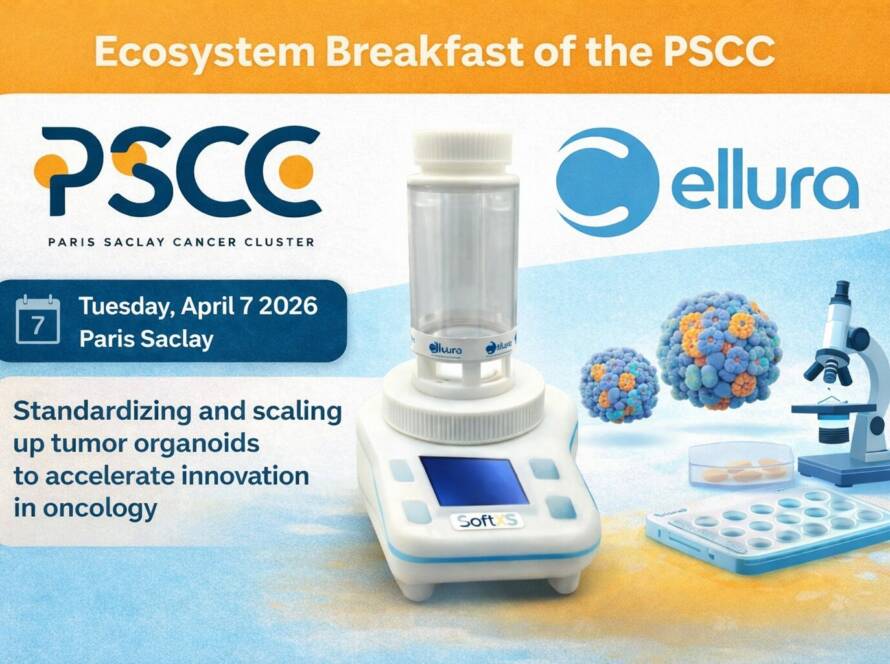
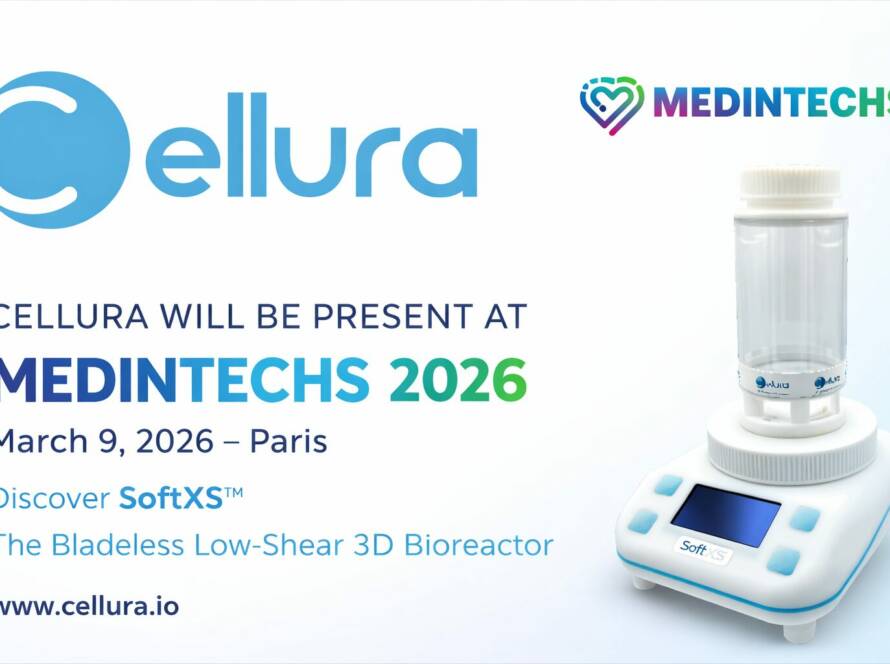
The SoftXS™ bioreactor integrates a bladeless, geo-inspired mixing system designed to minimize shear stress while ensuring homogeneous 3D suspension
For hematology researchers, this means the possibility to expand fragile immune and stem cell populations under reproducible and scalable conditions, without redesigning processes at each stage of development.
Bridging research and GMP reality
The future of hematology lies at the intersection of discovery and deployment. Clinical translation requires platforms that maintain biological quality while supporting operational efficiency.
The SoftXS™ approach addresses several critical dimensions:
• Controlled low shear stress compatible with sensitive hematopoietic cells
• Homogeneous nutrient and gas distribution
• Identical operating principles from laboratory scale to larger volumes
• Simplified integration into existing incubator-based workflows
In a field where reproducibility and standardization are increasingly scrutinized, these elements are central to accelerating innovation responsibly.
Contributing to the future of hematology
The 46th SFH Congress is more than a scientific meeting. It is a convergence point for translational ambition. By participating in this congress, Cellura aims to engage with hematology experts who are redefining how blood-related diseases are studied and treated.
Progress in hematology will not depend solely on new molecular targets or therapeutic strategies. It will also depend on the reliability of the platforms used to cultivate, expand and standardize the cells at the heart of these innovations.
Cellura is proud to contribute to this ongoing transformation by supporting gentle, scalable and reproducible 3D cell production for the next generation of hematology research and therapies.
About the event
More information about SFH Congress is available on the official website: https://sfh.hematologie.net/congres
For further information or to arrange a meeting:
Email: contact@cellura.io