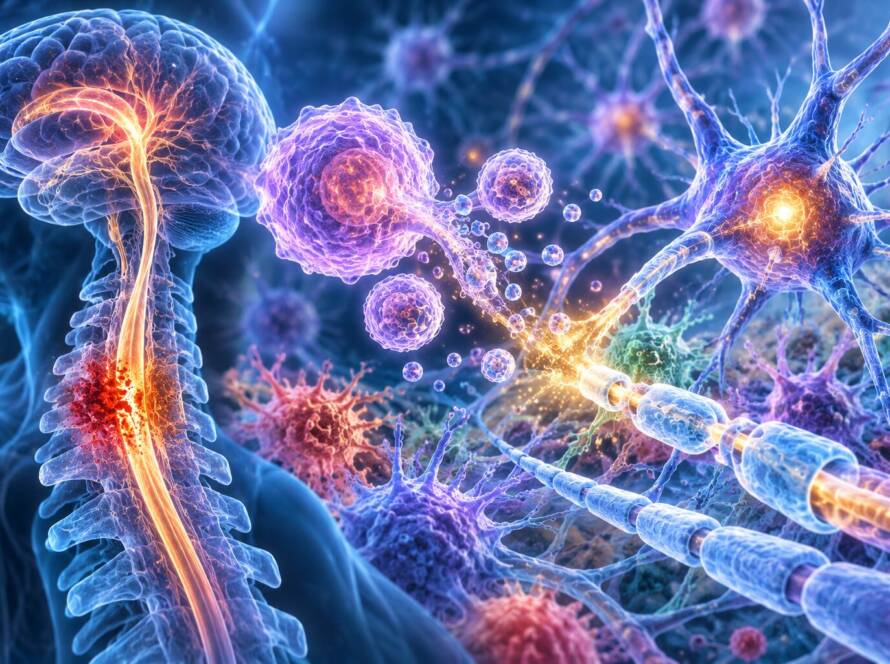
The increasing failure rate of anticancer therapies during clinical translation highlights a fundamental limitation of conventional preclinical models. While two-dimensional (2D) cell cultures have historically supported drug discovery pipelines, they fail to capture the structural, mechanical, and biochemical complexity of solid tumors. As a result, they provide only a partial and often misleading representation of therapeutic response.
In contrast, three-dimensional (3D) cell culture systems have emerged as powerful platforms capable of reproducing key features of tumor architecture, including spatial organization, cell–cell interactions, and microenvironmental gradients. Beyond their descriptive value, these systems enable a deeper mechanistic understanding of tumor behavior, particularly in the context of chemotherapy resistance.
Recent advances in bioengineering have further expanded the capabilities of 3D models, integrating controlled physical environments, tunable matrices, and dynamic culture conditions. These developments position 3D culture not merely as an improved model, but as a functional interface between biology and engineering, enabling the study of cancer systems at multiple scales.
Limitations of reductionist 2D systems
Traditional 2D models impose an artificial cellular organization that fundamentally alters cell behavior. Cells cultured on flat substrates exhibit:
- altered polarity and morphology
- simplified signaling networks
- homogeneous exposure to nutrients, oxygen, and drugs
As a consequence, these systems fail to reproduce the heterogeneity and spatial constraints that define tumor physiology.
Importantly, the absence of gradients in 2D eliminates critical drivers of resistance, including hypoxia, metabolic stress, and differential drug penetration. This leads to a systematic overestimation of drug efficacy and limits the predictive power of preclinical assays.
Therefore, the transition toward 3D systems represents a shift from reductionist biology to context-driven modeling, where cellular behavior is studied within a structured and dynamic environment.
Structural organization and emergent tumor behavior
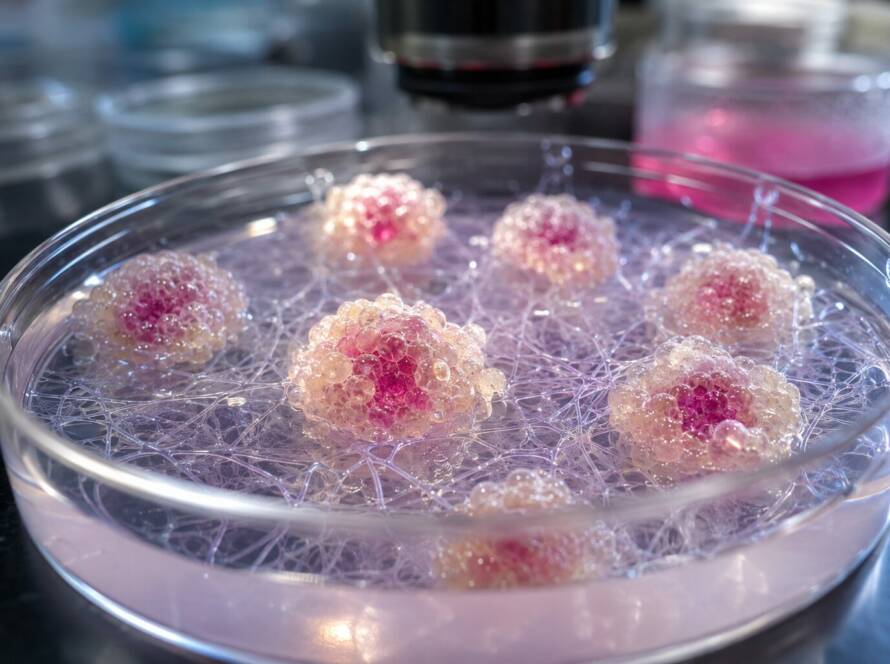
In 3D systems, cells self-organize into multicellular aggregates such as spheroids or organoids. This organization gives rise to emergent properties that are not observable in 2D.
One of the most defining features is the formation of spatial gradients. As the size of the structure increases, diffusion limitations lead to:
- oxygen depletion in the core
- reduced nutrient availability
- accumulation of metabolic byproducts
These gradients generate distinct cellular zones, ranging from proliferative outer layers to quiescent or hypoxic inner regions.
This spatial heterogeneity directly impacts therapeutic response. Cells located in the core are less exposed to drugs and often adopt survival phenotypes, contributing to the emergence of resistance.
Microenvironmental regulation of drug resistance
The tumor microenvironment plays a central role in modulating cellular response to chemotherapy. In 3D models, this environment emerges naturally from the interaction between physical constraints and cellular activity.
Several key mechanisms contribute to resistance:
- limited drug diffusion across the structure
- hypoxia-induced activation of survival pathways
- metabolic reprogramming under nutrient limitation
- enhanced intercellular signaling and collective adaptation
Importantly, these mechanisms are interconnected. For instance, hypoxia not only reduces drug efficacy but also induces gene expression changes that further promote resistance.
This highlights that chemotherapy resistance is not solely a genetic phenomenon, but rather a system-level response driven by microenvironmental conditions.
Gene expression dynamics in 3D systems
The transition from 2D to 3D culture induces profound changes in gene expression profiles. Transcriptomic analyses consistently reveal the activation of pathways associated with:
- drug efflux and transport
- anti-apoptotic signaling
- stress response and hypoxia adaptation
These changes reflect the ability of cells to sense and respond to their environment, adjusting their phenotype to enhance survival.
Moreover, the heterogeneity within 3D structures leads to the coexistence of multiple transcriptional states within the same population. This diversity is a critical factor in treatment failure, as it enables the persistence of resistant subpopulations.
Engineering approaches to controlled 3D culture
While spontaneous spheroid formation provides valuable insights, advanced bioengineering strategies now allow precise control over the 3D microenvironment.
These approaches include:
- tunable biomaterials that regulate stiffness and cell–matrix interactions
- microfluidic systems enabling dynamic control of nutrient and drug gradients
- bioreactors designed to maintain homogeneous yet physiologically relevant conditions
The objective is to balance biological realism with experimental control, enabling reproducible and scalable studies.
In this context, the control of mechanical forces, particularly shear stress, becomes critical. Excessive mechanical stress can alter cell viability and phenotype, while insufficient mixing leads to uncontrolled gradients. Therefore, optimized systems must ensure both gentle handling of cells and efficient mass transfer.
Toward scalable and predictive tumor models
A major challenge in the field lies in translating 3D culture systems from laboratory-scale models to scalable platforms compatible with industrial and clinical applications.
Scalability requires maintaining:
- consistent microenvironmental conditions
- reproducible cellular organization
- stable gene expression profiles
This is particularly important for applications such as drug screening, cell therapy, and regenerative medicine, where reproducibility and standardization are essential.
Emerging technologies aim to address these challenges by integrating principles of fluid dynamics, material science, and cellular biology into unified platforms.
Conclusion
Three-dimensional cell culture represents a paradigm shift in cancer research, moving from simplified representations toward integrated and physiologically relevant systems. By capturing the complexity of tumor architecture and microenvironmental regulation, 3D models reveal mechanisms of chemotherapy resistance that remain inaccessible in traditional approaches.
Beyond their biological relevance, advances in engineering are transforming these systems into controllable and scalable platforms, capable of bridging the gap between in vitro studies and clinical reality.
Taken together, these developments position 3D culture as a cornerstone of next-generation oncology research, where understanding and controlling the tumor microenvironment will be essential to improving therapeutic outcomes.