The seminar hosted at the Research Center of Saint-Antoine (CRSA) in Paris brought together researchers working at the intersection of oncology, hematology and translational medicine, with a shared objective: advancing the standardization and scale-up of tumor organoid models to accelerate innovation in cancer research.
This event highlighted the growing importance of three-dimensional cellular systems in oncology, as well as the technical and scientific challenges that still limit their full potential.
The growing role of 3D tumor models in oncology
Cancer research is progressively moving toward more physiologically relevant 3D cellular models, including tumor organoids and spheroids. These systems are increasingly used to:
• Model tumor heterogeneity and microenvironment interactions
• Evaluate therapeutic responses in controlled settings
• Support the development of precision medicine strategies
• Strengthen the link between preclinical research and clinical applications
Throughout the discussions, a clear consensus emerged: while organoids provide unprecedented biological relevance, their reliability depends heavily on the ability to control their culture conditions.
From biological complexity to physical constraints
One of the key themes of the seminar was the impact of physical parameters on organoid behavior.
Unlike conventional 2D cultures, 3D systems are highly sensitive to their mechanical environment. Variations in shear stress, mixing efficiency or nutrient distribution can lead to:
• Structural heterogeneity between organoids
• Altered cellular phenotype and function
• Reduced reproducibility across experiments
• Difficulties in scaling up culture systems
These challenges were identified as major barriers to the standardization of organoid-based models.
Why controlling the cellular microenvironment is critical
Discussions emphasized that controlling biochemical signals alone is no longer sufficient. The physical microenvironment, including mechanical forces and mass transfer, plays a central role in determining biological outcomes.
This is particularly critical for:
• Patient-derived tumor samples with intrinsic variability
• Stem cell-derived organoids requiring controlled differentiation
• Complex co-culture systems
• Long-term experiments where stability is essential
Ensuring homogeneous and low-stress culture conditions was highlighted as a prerequisite for generating robust and reproducible data.
Cellura’s contribution: enabling controlled and scalable 3D culture
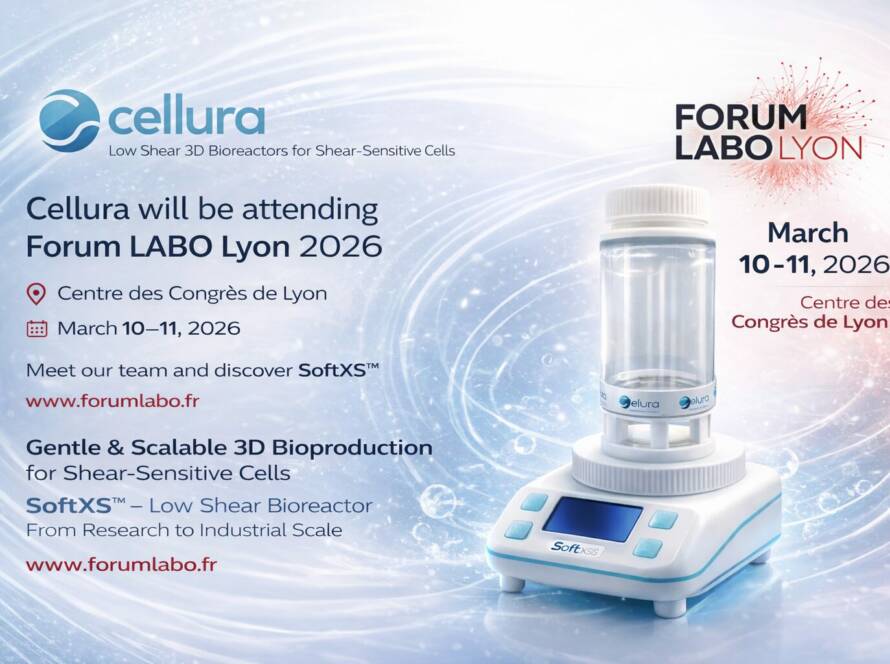
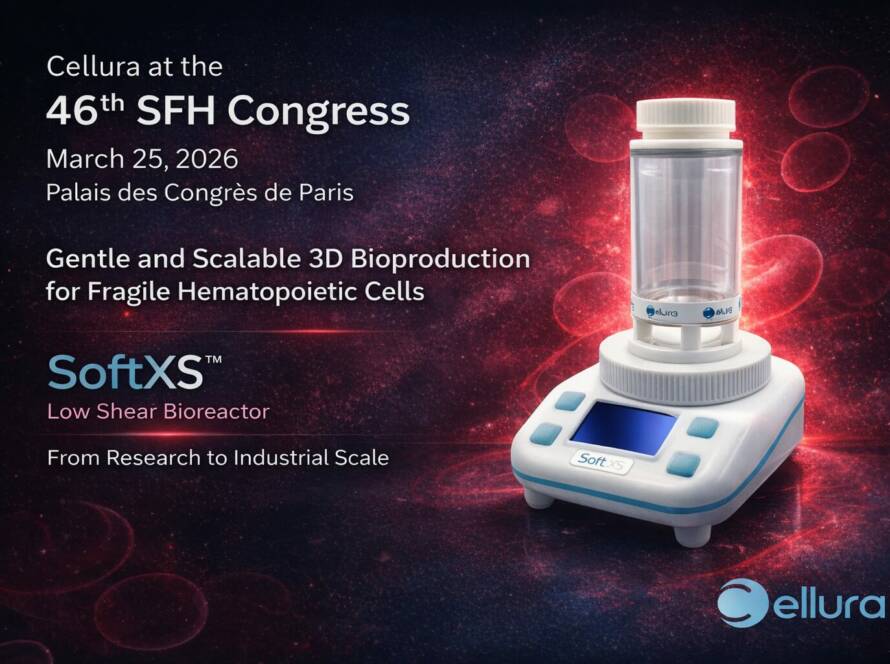
During the seminar, Cellura presented its approach to addressing these challenges through the SoftXS™ bioreactor.
The technology is based on a bladeless, geo-inspired mixing system, designed to generate controlled fluid dynamics while minimizing mechanical stress on cells.
This approach enables:
• Homogeneous suspension of cells and organoids
• Significant reduction of shear-induced stress
• Stable and reproducible culture environments
• Consistent behavior across different scales
By decoupling mixing efficiency from mechanical stress, this system offers a new framework for culturing fragile 3D biological systems.
Bridging organoid research and translational applications
A key takeaway from the seminar was the need to bridge the gap between advanced in vitro models and their practical use in translational research.
For organoid technologies to fully support oncology innovation, they must be:
• Reproducible across experiments and laboratories
• Stable over time
• Compatible with increasing culture volumes
• Adaptable to preclinical and clinical workflows
Maintaining consistent physical conditions across scales was identified as a critical factor in achieving these objectives.
Toward more reliable and scalable oncology models
The CRSA seminar illustrated a broader shift in biomedical research, where engineering principles are becoming integral to biological innovation.
Advances in oncology will increasingly depend on the ability to produce standardized, scalable and biologically relevant cellular models.
By contributing to these discussions, Cellura reaffirms its commitment to supporting researchers with technologies designed to improve reproducibility, scalability and control in 3D cell culture.
About Cellura
Cellura develops bioreactor technologies enabling gentle, scalable and reproducible 3D cell culture.
By combining expertise in fluid mechanics and cell biology, Cellura supports innovation across oncology, cell therapy and regenerative medicine, helping to unlock the full potential of complex cellular systems.
Email: contact@cellura.io