The development of innovative cell therapies is expanding beyond conventional T cells and natural killer (NK) cells. Among emerging immune cell populations, mucosal-associated invariant T (MAIT) cells offer promising opportunities for cancer immunotherapy. Their unique antigen recognition mechanisms, tissue-homing capabilities, and functional plasticity make them attractive candidates for next-generation therapeutic strategies.
However, translating their biological potential into therapeutic applications remains challenging. Limited cell availability, complex expansion requirements, and difficulties in maintaining functional potency represent significant barriers. Therefore, developing controlled and reproducible cell culture processes will be essential to support the advancement of MAIT-based immunotherapies.
Understanding the Unique Biology of MAIT Cells
MAIT cells are a specialized population of innate-like T lymphocytes that connect innate and adaptive immunity. Unlike conventional T cells, they recognize microbial metabolites associated with riboflavin biosynthesis through the highly conserved MR1 molecule. This recognition mechanism distinguishes them from conventional T lymphocytes and provides opportunities for developing broadly applicable cellular therapies.
MAIT cells can become activated through two complementary pathways. The first involves antigen recognition through the MR1-T cell receptor interaction. The second relies on inflammatory cytokines, particularly IL-12, IL-15, and IL-18, which can stimulate MAIT cells independently of antigen recognition.
Following activation, MAIT cells can produce inflammatory cytokines and cytotoxic molecules, including interferon-gamma (IFN-γ), tumor necrosis factor-alpha (TNF-α), granzyme B, and perforin. Moreover, their ability to interact with other immune populations, particularly NK cells, contributes to the regulation of immune responses.
Functional Plasticity Within the Tumor Microenvironment
One of the most distinctive characteristics of MAIT cells is their functional plasticity. Depending on surrounding biological signals, these cells can support antitumor immunity or contribute to tumor progression.
Under favorable activation conditions, MAIT cells can develop cytotoxic functions associated with the MAIT1 phenotype. However, prolonged exposure to immunosuppressive signals may promote alternative functional states. In particular, cytokines such as TGF-β and IL-23 can favor IL-17-producing phenotypes associated with tumor-supporting mechanisms in certain cancers.
Furthermore, metabolic conditions within tumors can influence MAIT cell functionality. Hypoxia, nutrient competition, lactate accumulation, and oxidative stress may contribute to cellular dysfunction and exhaustion. Increased expression of inhibitory receptors, including PD-1, TIM-3, and LAG-3, can further restrict proliferation and cytotoxic activity.
These observations highlight the importance of understanding how environmental conditions influence immune cell behavior. For therapeutic development, increasing cell numbers alone is insufficient. Preserving the desired functional phenotype is equally important.
CAR-MAIT Cells: Emerging Opportunities in Cancer Immunotherapy
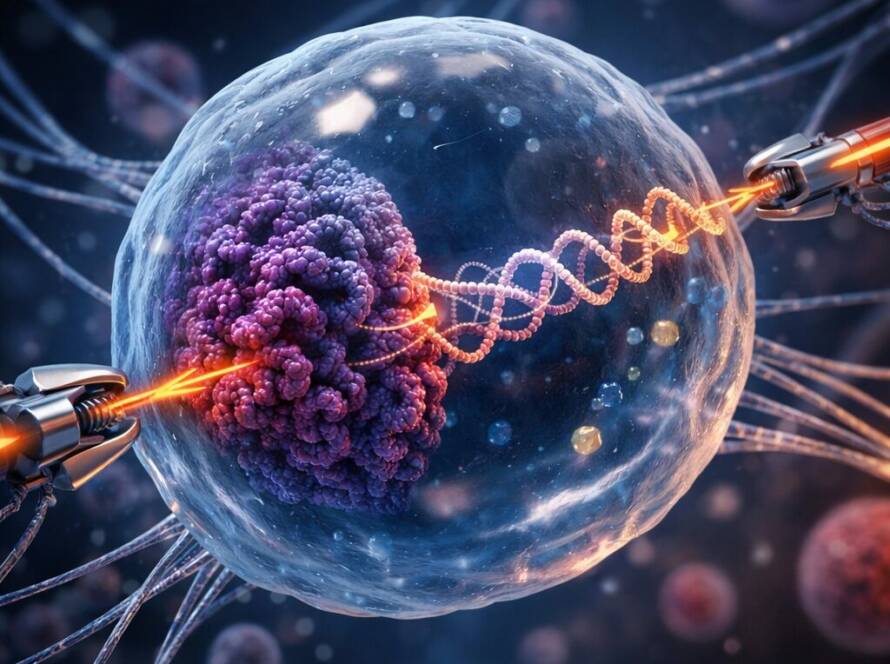
Genetic engineering offers new possibilities for enhancing the therapeutic potential of MAIT cells. In particular, chimeric antigen receptor (CAR) technology enables researchers to develop CAR-MAIT cells with additional tumor-targeting capabilities.
By combining their intrinsic antigen recognition mechanisms with engineered receptors, CAR-MAIT cells could provide complementary approaches to tumor recognition. Their tissue-homing properties and relatively low allogeneic reactivity also make them interesting candidates for future off-the-shelf cellular therapies.
Nevertheless, several challenges remain. These include limited persistence, functional exhaustion, and uncertainties regarding long-term safety. In addition, manufacturing processes must generate sufficient cell numbers while maintaining consistent biological characteristics and antitumor activity.
Consequently, advances in cellular engineering must be accompanied by improvements in cell expansion and manufacturing strategies.
iPSC-Derived MAIT Cells: Toward Scalable Cell Production
The limited availability of primary MAIT cells represents a major obstacle to large-scale therapeutic development. Induced pluripotent stem cells (iPSCs) offer a potential alternative for overcoming this limitation.
Researchers have demonstrated that MAIT cells can undergo reprogramming into pluripotent stem cells, followed by directed differentiation into MAIT-like cells, known as reMAIT cells. These populations can express characteristic MAIT cell markers, including TCR Vα7.2, CD161, and IL-18Rα. Preclinical investigations have also demonstrated promising antitumor activity.
However, producing iPSC-derived MAIT cells requires careful control of multiple biological stages. Researchers must maintain appropriate differentiation conditions, ensure cellular purity, and achieve sufficient functional maturation. Moreover, eliminating residual undifferentiated iPSCs is essential for addressing safety concerns.
Developing scalable, serum-free, and feeder-free differentiation processes could therefore represent an important step toward standardized manufacturing and future clinical translation.
Overcoming Challenges in MAIT Cell Expansion
Conventional MAIT cell expansion remains technically demanding, time-consuming, and costly. Some approaches also rely on feeder cells, introducing additional complexity into the manufacturing process.
Artificial antigen-presenting cells (aAPCs) offer an alternative strategy. These systems can combine MR1-based antigen presentation with co-stimulatory signals delivered through antibody-coated beads. Experimental approaches have demonstrated the possibility of expanding MAIT cells while retaining selected phenotypic characteristics, cytokine secretion capabilities, and cytotoxic activity.
However, transferring these approaches to larger culture volumes introduces additional engineering challenges. In particular, maintaining homogeneous interactions between MAIT cells and activation beads becomes increasingly important as production scales increase.
Uneven distribution of activation components could contribute to heterogeneous stimulation and variable cellular responses. Therefore, controlling suspension conditions and cell-bead interactions represents an important consideration when developing reproducible expansion processes.
The Importance of Controlled Culture Environments
As immune cell manufacturing progresses toward larger-scale applications, the physical culture environment becomes an increasingly important process parameter. Beyond biochemical stimulation, culture systems must provide appropriate nutrient distribution, consistent cellular interactions, and suitable hydrodynamic conditions.
For MAIT cell expansion, maintaining a homogeneous suspension could help support more consistent exposure to activation signals. Furthermore, controlling mechanical stress represents a relevant direction for investigating how culture conditions influence cellular viability, proliferation, and functional stability.
Low-shear dynamic culture approaches offer opportunities to explore the balance between effective mixing and limited mechanical stress. However, their specific influence on MAIT cell expansion and therapeutic potency requires dedicated experimental validation.
Ultimately, optimizing these parameters could contribute to the development of more reproducible culture workflows, particularly for bead-assisted expansion and iPSC-derived immune cell manufacturing.
Toward Standardized Manufacturing of MAIT-Based Cell Therapies
The successful development of MAIT-based immunotherapies will depend on the ability to combine biological innovation with robust manufacturing processes. While genetic engineering and directed differentiation can expand therapeutic possibilities, consistent cell quality remains a fundamental requirement.
Future manufacturing strategies will need to address several interconnected objectives: efficient cell expansion, phenotypic stability, functional maturation, cellular purity, and reproducibility between production batches.
In parallel, advanced characterization methods will be necessary to evaluate how culture conditions influence MAIT cell behavior. Combining phenotypic analysis with functional assays and metabolic characterization could help identify the parameters that support desirable therapeutic properties.
Developing controlled and scalable culture environments will therefore be an important component of the transition from fundamental MAIT cell research toward translational and industrial applications.
Future Perspectives for MAIT Cell Immunotherapy
MAIT cells represent an emerging frontier in cancer immunotherapy. Their distinctive antigen recognition mechanisms, functional diversity, and engineering potential create new opportunities for developing innovative cellular treatments.
Nevertheless, their clinical translation requires a deeper understanding of the relationship between cellular expansion, environmental regulation, and therapeutic functionality. The development of CAR-MAIT cells and iPSC-derived MAIT populations further emphasizes the need for standardized and scalable manufacturing strategies.
As research advances, integrating cellular engineering with controlled dynamic culture technologies could open new opportunities for optimizing immune cell production. The objective is not simply to generate larger cell populations, but to produce consistent, viable, and functionally competent cells capable of supporting future therapeutic applications.